Babel
I spent half of my first 18 years in two residences without a permanent foundation.
Until the age of five, it was a singlewide trailer.
From 14 through 18, it was a double.
Trailers (or mobile homes, if you want it to sound a little less poor) are common in rural Appalachia, as I’m sure they are in the rural Midwest and the rural other places. They’ve even become somewhat chic in parks where those who choose to live in a house on wheels, decorated with mismatched vintage furniture and adorned with strands of lantern lights, sip kombucha and jam on their ukuleles while the cool kids next door knit sweaters for their purebred ferret.
My family didn’t have a ferret in either, though we did share life in and around the double with plenty of cats, dogs, chickens, ducks, and goats, including one who broke free from the local feed store and found his way to the land my brother was clearing for his future home – complete with a permanent foundation. The double also came with plush, blue carpet and three bathrooms. Compared to only one in the single and one in the in-between house, we were on the cusp of highfalutin.
I didn’t, and still don’t talk about either trailer very much, but I hear it and feel it in vulnerable moments. It’s one of the subjects that’s still acceptable to joke about by those who have never known the thinness of mobile home walls or the way cold air comes up through the floor if cinder blocks and underpinning are enough to pass inspection, but short on protecting the entirety of the home’s underside from weather’s emotional baggage.
Once upon a time, I even laughed along when I heard someone joke about the University of Kentucky basketball fans not having to worry about finding or paying for a hotel because their house could travel. I didn’t want anyone to know that two of mine had.
At another gathering with dear friends, one I had organized at a favorite Italian spot in Nashville where I had shared birthday drinks and reunion dinners, I found myself trying to fit into a conversation about Europe. One of the women among us was planning an incredible solo adventure and others were commenting on their favorite spots in Italy or how you never know bread until you’ve eaten a French baguette – in France. As the only person at the table who had never been overseas and had barely traveled west of the Mississippi, I offered my “Oohs” and “Aahs” and, “Oh, that sounds lovely” and, “I’ll have to add it to my list!” with each passing landmark or regional wine I did not, and likely still do not know.
It is a difficult thing to be among the many who don’t speak your language, especially when you so deeply desire to be fluent in theirs.
Or affluent in theirs.
My sister, four years older though always much more in terms of responsibility, worked third shift at Walmart during the same years we were both in school. I was studying theology as a graduate student, and she was working on an associate degree to become a Medical Assistant. It was her second degree, too – the first having prepared her for college transfer. She had spent some time at the university where I completed my undergraduate degree, but she quickly realized that it wasn’t the right fit. Even so, she left with a 4.0.
The differences between our lives in those two years were reflective of that language piece. She went on little to no sleep from Walmart to clinicals, paying her own way through the education that would give her a career. I borrowed ridiculous amounts of money from the government to spend time in an environment where I gave into the “Walmart is the devil” mentality of social justice efforts that failed to admit or even acknowledge that shopping elsewhere is a privilege. I have no regrets about my education, but I do regret not speaking my life, or hers, out loud.
It’s the same regret I have for forcing my accent to go away in college because I bought into the assumption that sounding Southern meant sounding uneducated. Movies and television shows will use that twang on a character to dumb them down or sweeten them up, but rarely to show a smart woman working her way through the Biblical Hebrew lexicon.
The things we do to make ourselves fit hurt our selves.
By late 2014, I recognized that the language of the city where I lived was no longer the language of my then current life. Elizabeth Gilbert talked about this in Eat, Pray, Love – about the truth that people and places have words. For Rome, the word was sex. For Liz, it was attraversiamo. For New York City, it was achieve. I was beginning to see that the word for Nashville was something like develop, though not the kind that broadens your thoughts. Things were going up for the sake of saving space. Taller. Skinnier. Pricier.
My word was breathe, something I hadn’t been doing too well for those months I had just passed in depression and hopelessness, but it was the word I carried around on the back of my iPod shuffle. Engraving was an option at order so I did it to remind myself that in any moment, the only thing we have to do is breathe.
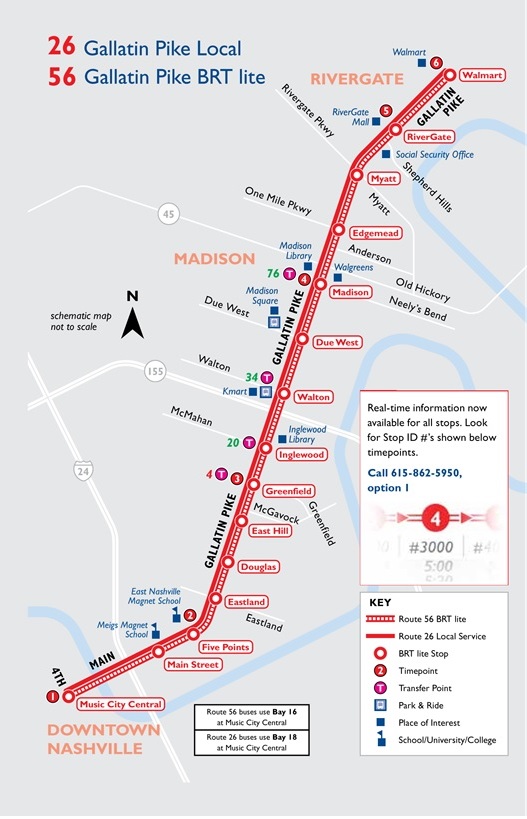
On Thanksgiving night, 2014, I decided to leave development for breath. It was a spontaneous decision, but a necessary one. The day after Thanksgiving, 2014, I hopped on the #76 to start knocking out the routes I had left to ride before bidding farewell to Music City and the Nashville MTA. It had been my transportation lifeline for most of my city living and had given me opportunities to see beyond the Batman Building skyline and reflect on my own story, as well as the stories that stepped on and off at each stop.
At one of those stops on the Madison Connector, a man sitting near the front heard something familiar, an accent, when another man stepped on the bus. After establishing, in English, that the second man was from Miami, the two started speaking in Spanish. Man #1 changed seats and joined his new friend for the rest of his ride, talking up things that I didn’t understand, but could feel. It’s a wonderful thing to be among even one who speaks your mother tongue.
Sometimes it takes a different language to recognize how much you love your own.
Maybe Babel was a gift.